
Winter has a very specific scam: it convinces sensible people that the only way to cope is bread, cheese, and a permanent relationship with the oven. Comfort food is not the enemy. The problem starts when your “comfort” becomes a daily default and quietly replaces the things that actually make you feel well: stable appetite, decent digestion, and energy that does not rely on caffeine and willpower.
I’m not interested in guilt or diet culture theatre. I’m interested in building a winter way of eating that feels grounding, warming, and realistic, without turning into a slow motion spiral of cravings and regret.
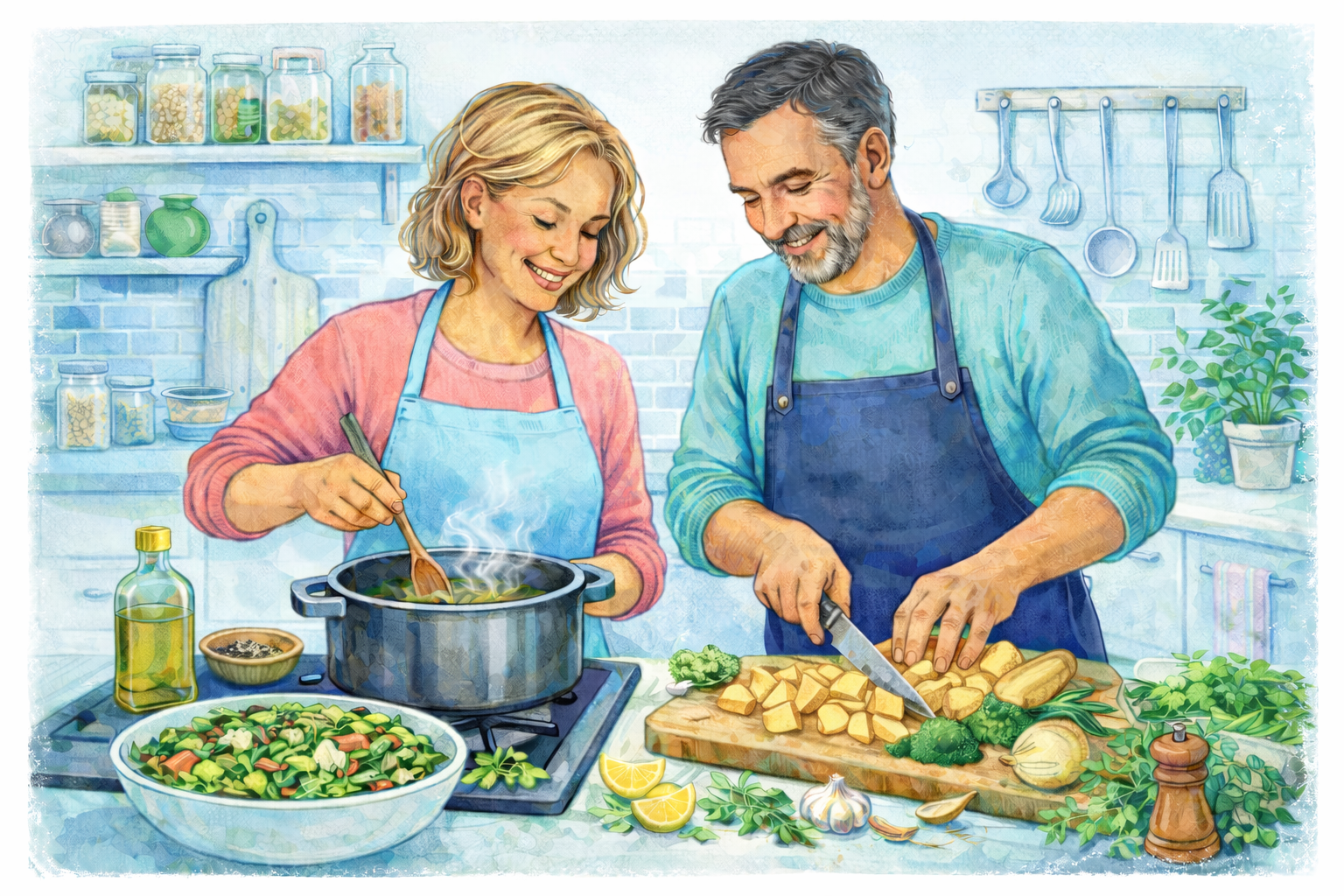
Why winter makes you crave heavier food
Cold weather pushes us towards warmer, denser meals for a reason. Warm food is calming for the nervous system, easier to digest for many people, and genuinely satisfying. Also, we move less, get less daylight, and spend more time indoors, which shifts appetite cues and snack habits. The fix is not “eat like it’s summer”. The fix is “eat like it’s winter, but with a brain”.
The winter plate that keeps you satisfied
If you want winter comfort without the slump, build most meals around three things:
Protein: because it actually fills you up and reduces the constant mental chatter about food.
Cooked vegetables: because raw salads in winter are a punishment for no reason.
A sensible portion of starch: because winter is not the season for heroic restriction, and most people do better when there is something grounding on the plate.
This can look like stew, soup, traybake, curry, or leftovers. The format matters less than the structure.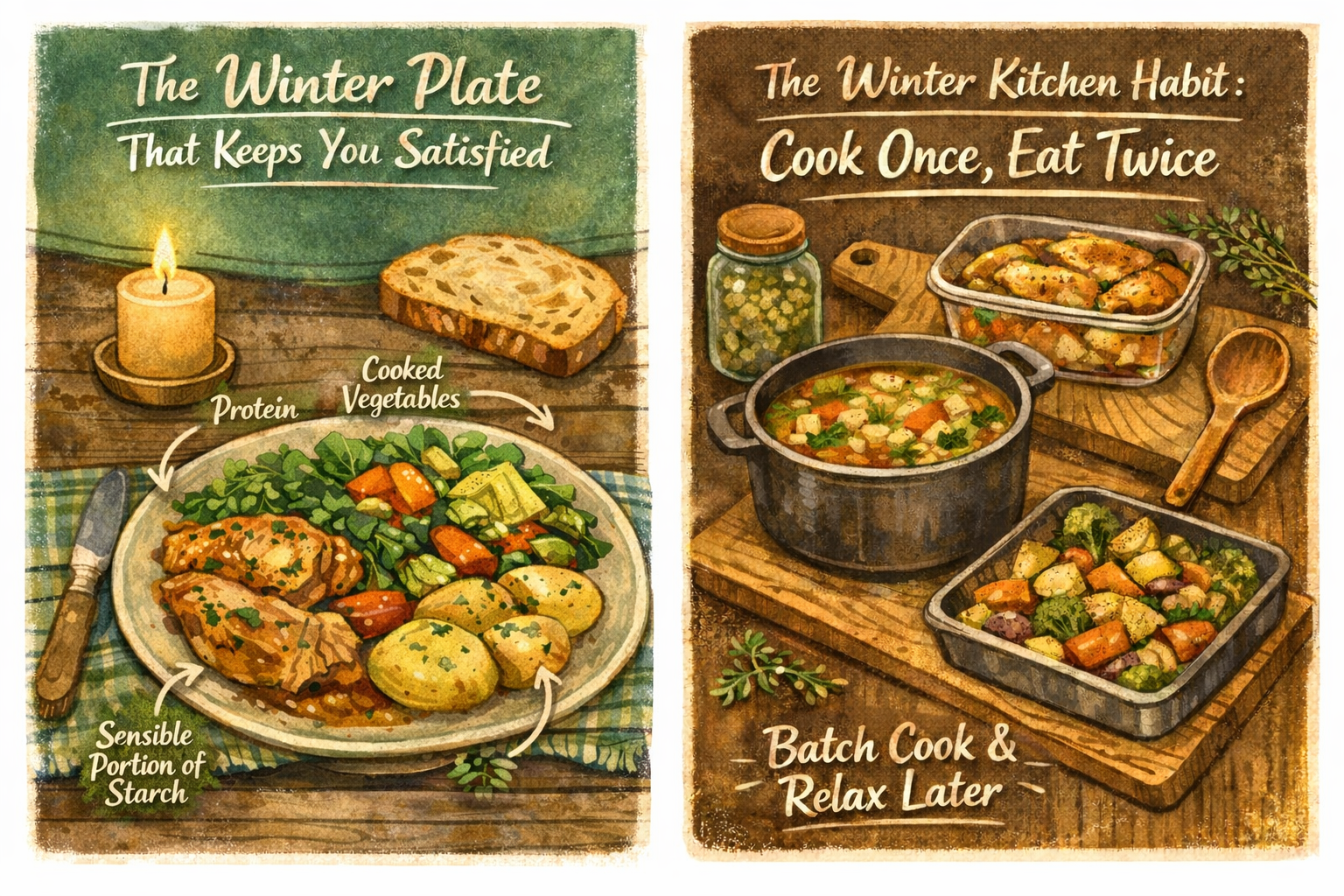
Soup is not a “starter”. It is a strategy.
A proper soup is one of the smartest winter meals, because it solves three problems at once: hydration, warmth, and nutrient density. The mistake people make is treating soup as a light beginning and then eating something else because they are still hungry.
Make soup a full meal by adding protein (chicken, lentils, beans, fish, eggs, yoghurt on top if you tolerate dairy), and finish it with olive oil or butter for satiety. Suddenly soup is not “diet food”. It is winter survival.
Stop confusing “treats” with “daily structure”
If you bake, cook, or snack more in winter, fine. But keep treats as a deliberate choice, not a background habit. The easiest way to do that is to ensure your main meals are proper meals. People rarely binge on biscuits when lunch actually did its job.
A useful rule: if you are craving sweets or constant snacks, check whether you had enough protein at your last meal, and whether your meal was warm and substantial. Winter cravings are often a meal design issue, not a personality flaw.
A simple winter meal rhythm that works for busy humans
Choose two winter breakfasts you can repeat. Choose three winter lunches you can rotate. Choose three dinners you can batch cook. Not because repetition is boring, but because decision fatigue is the fastest route to takeaway and random snacking.
Examples that do not require culinary ambition:
Eggs with something savoury on the side.
Cottage cheese with garlic, radish, and chives, plus good bread.
Leftover stew.
Tinned fish with warm potatoes and greens.
Roasted vegetables with a protein and a sauce.
Warm drinks that support you, not sabotage you
Winter drinks can either stabilise you or quietly wreck your appetite. Sugary hot drinks are basically dessert in a mug. If you love them, keep them, but treat them like treats.
Daily support drinks are things like herbal teas, ginger infusions, or plain warm water. And if you drink coffee, have it after food. Coffee as breakfast is not a lifestyle, it’s a glitch.
The winter kitchen habit that changes everything
Cook once, eat twice. Batch cook one protein and one tray of vegetables. Make one pot of soup. Keep it in the fridge. Winter is not the time to cook from scratch every day unless you truly enjoy it. Most people do not. Most people just like the idea of being the kind of person who enjoys it.
The point
Winter comfort food is not the villain. The villain is a winter routine with no structure: too little real food early in the day, too many snacky bits, and dinner that becomes a compensation for the entire week.
If you build meals that are warm, substantial, and balanced, you get comfort and wellbeing at the same time. Annoyingly, it works.